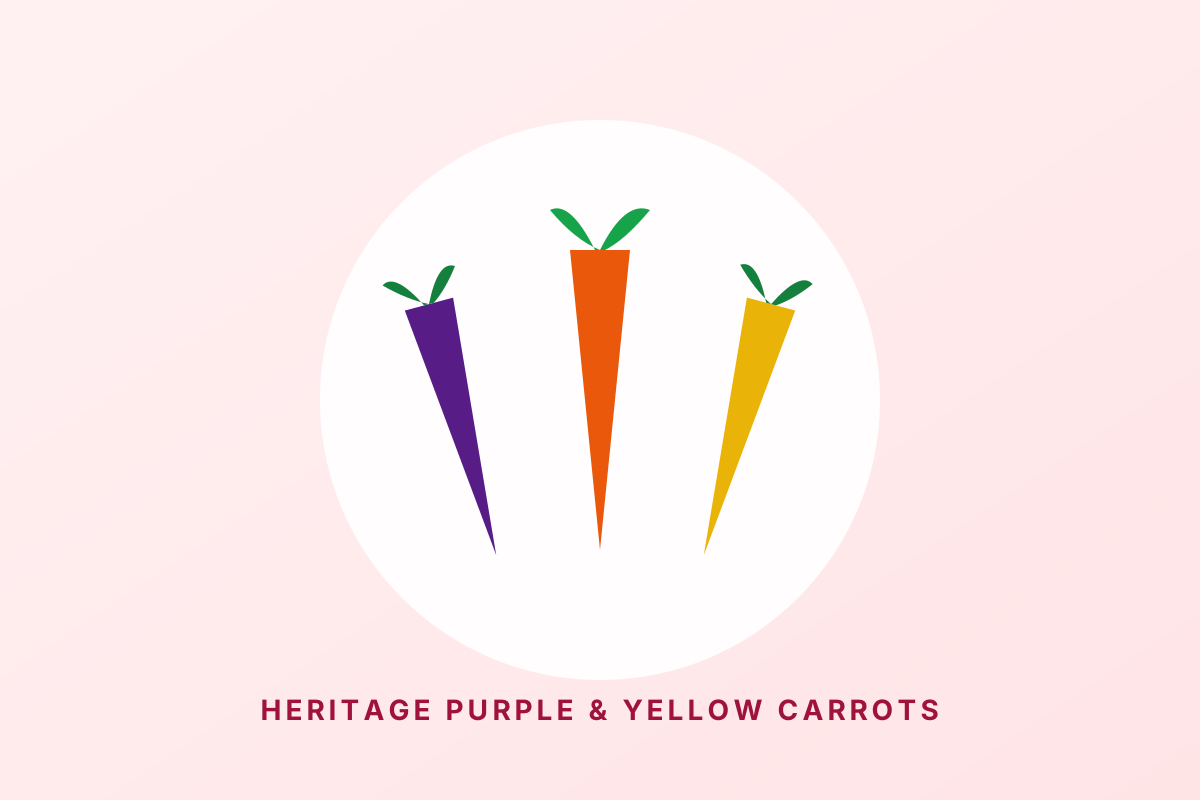
Historical records and 10th-century Persian culinary texts describe wild carrots as bitter, woody roots with vibrant purple skins. They were prized initially for medicinal seeds and fragrant leaves rather than taproots.
In the 1500s and 1600s, agriculturists in the Netherlands cultivated sweeter, milder mutants rich in beta-carotene. Contrary to popular myth that they were made solely for the House of Orange, the new strain gained popularity because it was sweeter, plumper, and didn’t turn cooking broth dark purple.
Today, purple, yellow, and white heritage carrots are experiencing a culinary resurgence due to their unique antioxidant profiles.
Key Takeaways
- Original wild carrots were purple, white, and yellow from Central Asia.
- Dutch agriculturalists stabilized sweet orange mutations rich in beta-carotene in the 1500s.
- Orange carrots dominated because they tasted sweeter and did not discolor stews.
Sources & Archival References: