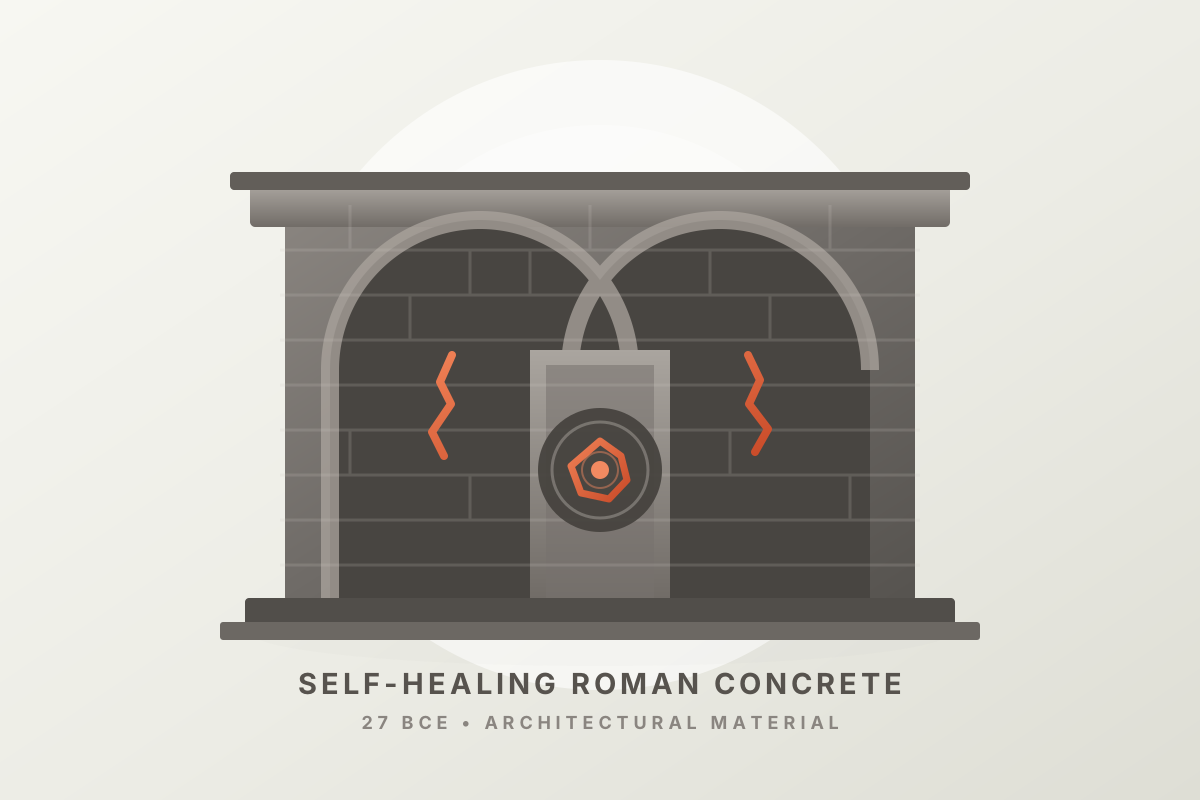
For centuries, scholars believed that tiny white chunks found in Roman concrete were simply the result of sloppy mixing techniques. In 2023, an MIT-led research team proved the exact opposite: those white specks are a deliberate self-repair mechanism.
Romans mixed dry quicklime (calcium oxide) directly with volcanic ash and water at searing temperatures, a process known as hot mixing. This created durable, reactive lime clasts throughout the mortar matrix.
When micro-cracks develop over time and expose the interior to moisture, rainwater dissolves these lime clasts. The resulting calcium-saturated solution recrystallizes into solid calcium carbonate, sealing the cracks within days and preventing structural failure.
Key Takeaways
- Quicklime clasts act as dormant chemical reserves inside the stone.
- Infiltrating rainwater triggers recrystallization of calcium carbonate.
- Self-healing concrete allowed unreinforced domes like the Pantheon to endure two millennia.