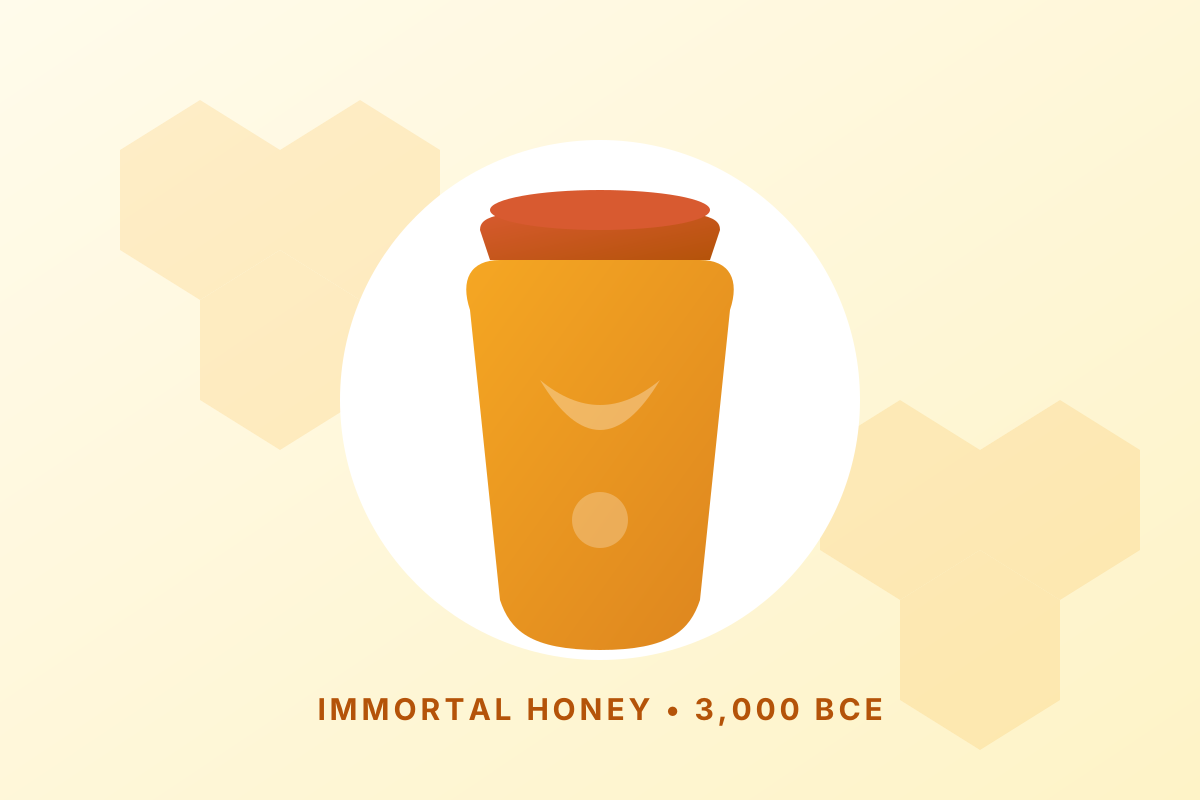
When archaeologists cracked open tombs in the Valley of the Kings, they discovered undisturbed clay jars containing golden, crystallized honey. Upon laboratory testing, the honey was found to be chemically intact and biologically sterile.
The secret lies in a relentless trio of natural defenses. First, honey is hygroscopic with less than 18% water content. Any bacteria or fungi that land in honey have their internal water instantly drawn out by osmosis, shriveling and destroying the microbes before they can divide.
Second, honey is acidic. When bees process nectar, they secrete the enzyme glucose oxidase, which breaks glucose down into gluconic acid and hydrogen peroxide. The resulting pH of 3.26 to 4.48 creates an environment far too hostile for pathogenic bacteria to thrive.
As long as honey is sealed away from atmospheric humidity, it is effectively immortal.
Key Takeaways
- Low moisture (under 18%) deprives microbes of water via osmosis.
- Bee stomach enzymes produce gluconic acid and natural hydrogen peroxide.
- Sealed honey can survive indefinitely without chemical preservatives.