
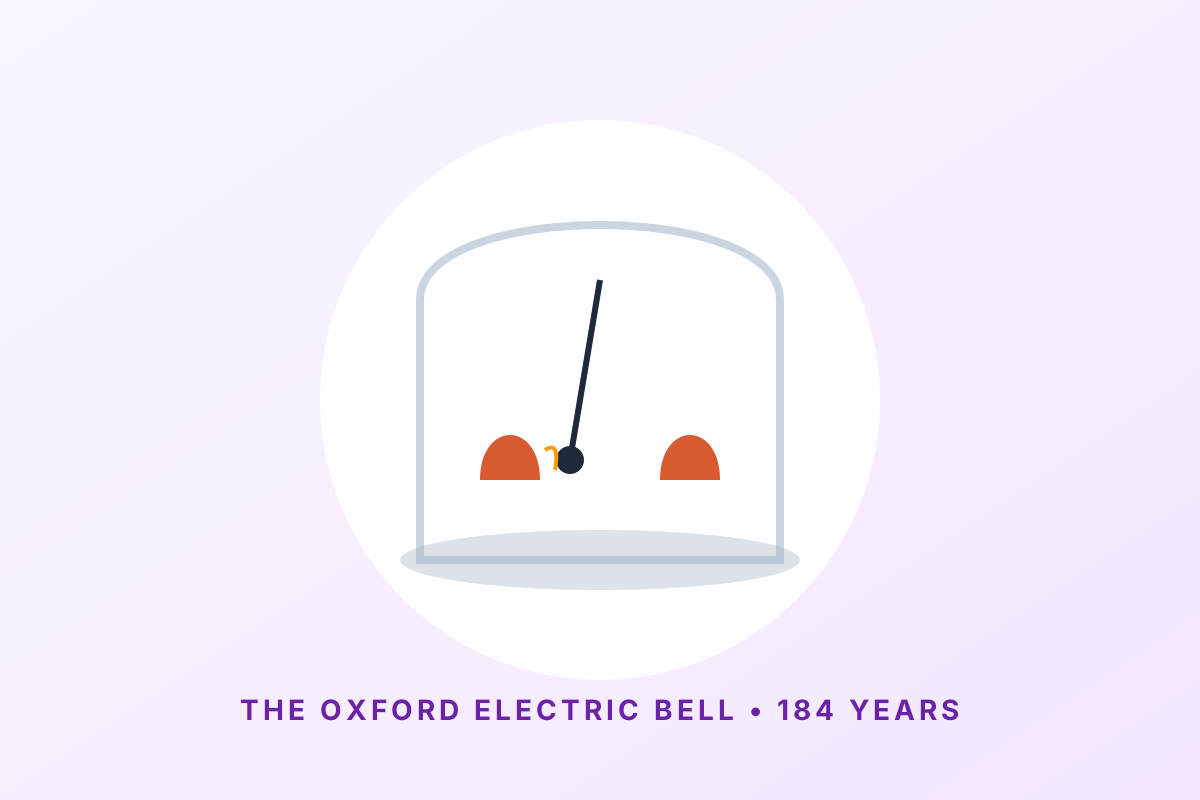
Constructed in 1840 by instrument maker Thomas Singer, the bell was purchased by an Oxford physicist and placed in an airtight glass enclosure. It has been chiming continuously ever since.
The battery is a "dry pile" composed of alternating discs of metal foil and paper coated with manganese dioxide and honey or paste. The high voltage produces an electrostatic charge that attracts the clapper, which discharges against the bell and is repelled to the other side.
Because each oscillation consumes only around 1 nanoampere of current, the battery has not yet drained its chemical potential after nearly two centuries.
Key Takeaways
- Over 10 billion oscillations recorded since 1840.
- Operates on high electrostatic voltage with nano-amp current draw.
- Protected under double-walled glass at Oxford’s Clarendon Laboratory.
Sources & Archival References: