Few sensory memories evoke a sunny weekend quite like the sweet, pungent aroma drifting across a newly mowed lawn. Many people find the fragrance soothing, clean, and nostalgic. However, from the perspective of the grass itself, that distinctive scent is the botanical equivalent of a frantic scream for reinforcements.
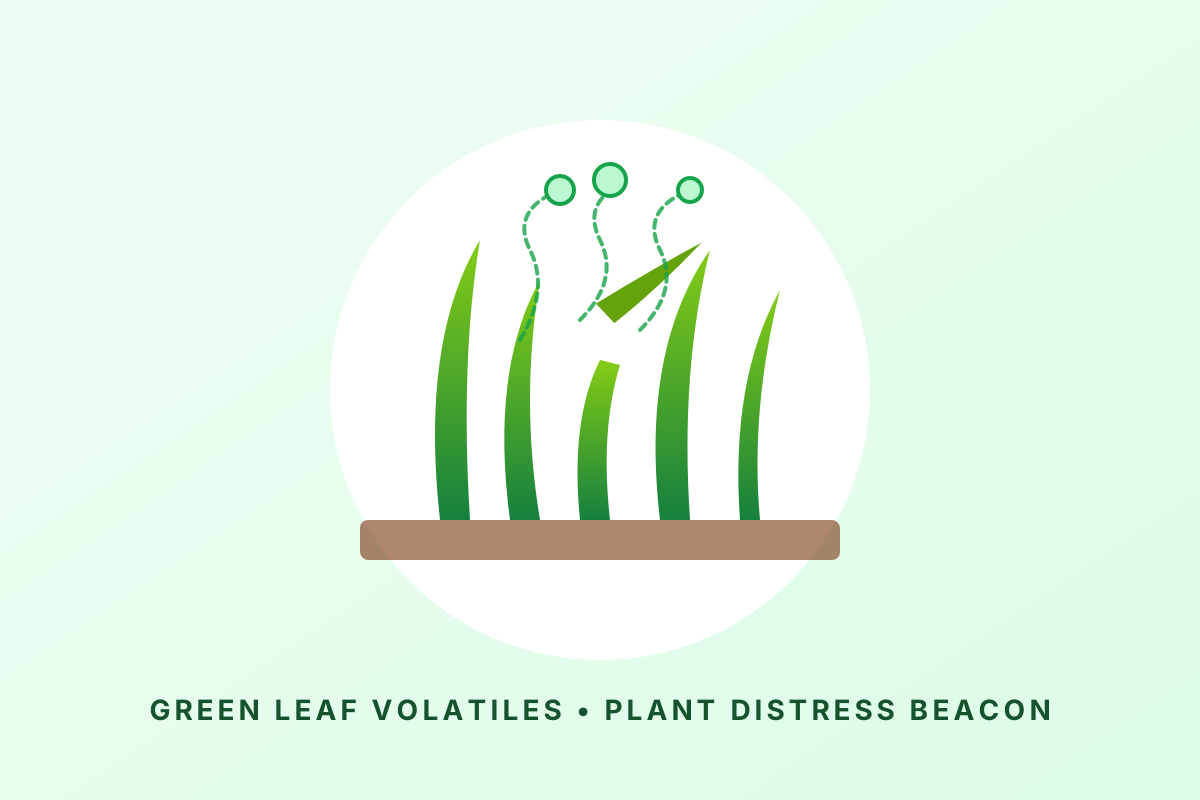
Plants cannot run from danger or physically strike back against threats. When spinning lawn mower blades violently lacerate individual blades of grass, cellular membranes rupture and expose enzymes to oxygen. Within seconds, lipoxygenase enzymes break down damaged fats into volatile organic compounds known collectively as green leaf volatiles, or GLVs.
The primary chemical culprit behind the sharp grassy note is an aldehyde called (Z)-3-hexenal, which swiftly converts into (E)-2-hexenal and hexyl acetate. In nature, these airborne molecules act as an emergency signaling network. Nearby, intact plants sniff these compounds and immediately begin synthesizing defense proteins, sealing their own pores, and shifting sugars downward into their root systems.
Even more remarkable is how the scent interacts with the wider ecosystem. When caterpillars or beetles chew on plant tissues, the specific blend of GLVs released serves as a botanical distress beacon for predatory insects. Parasitic wasps and beneficial beetles detect the chemical plume and follow it directly to the traumatized foliage, where they prey on the insects responsible for the damage.
Key Takeaways
- The fresh-cut grass scent is composed of green leaf volatiles (GLVs) created by ruptured plant membranes.
- Airborne GLVs warn nearby undamaged vegetation to pre-emptively produce defensive tannins and toxins.
- The chemical distress plume summons predatory wasps and beetles to exterminate leaf-eating insects.