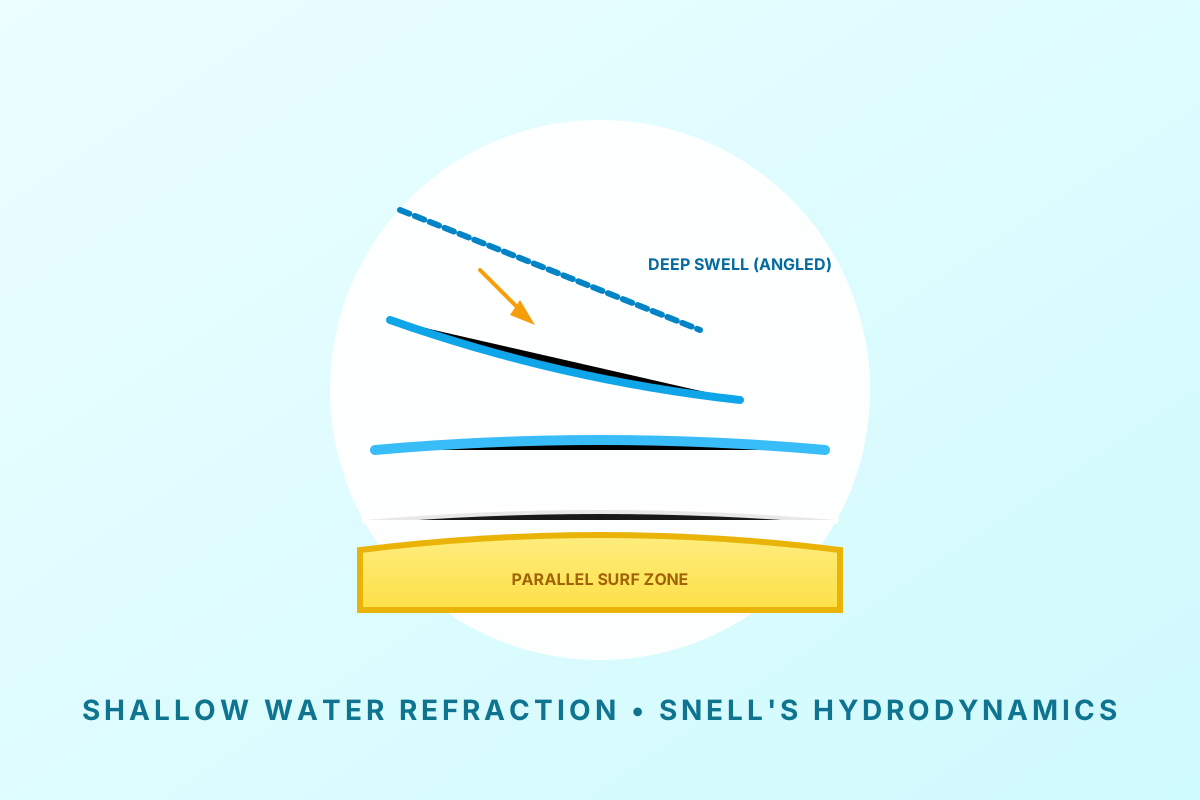
Whether you are walking along the Atlantic coast of Portugal, the beaches of California, or the shores of Sri Lanka, you will witness the same ocean dynamic: wave crests roll in and break almost perfectly parallel to the sandy beach. This happens even when offshore storms and prevailing trade winds blow at sharp 45-degree angles to the coast.
Waves do not originate at the beach; they are born thousands of miles away in open ocean tempest zones where wind friction generates energy swells traveling across deep water. In the open sea, these swells travel in the exact direction the storm propelled them, indifferent to the distant arrangement of continents.
Everything changes when the swell approaches land. In ocean physics, a wave begins to 'feel the bottom' when the water depth decreases to less than half its wavelength. As the seabed slopes upward, friction slows the speed of the wave. The shallower the water becomes, the slower the wave travels.
When a wave approaches a coastline at an angle, the end of the wave crest closest to shore enters shallow water first and immediately decelerates. Meanwhile, the deeper end of the same wave continues racing ahead at full deep-water speed. This velocity difference causes the wave crest to pivot and bend: a hydrodynamic process called wave refraction. By the time the wave crest finally reaches the surf zone, it has refracted into near-perfect parallel alignment with the contours of the beach.
Key Takeaways
- Deep-water ocean swells travel in whatever direction distant storm winds pushed them.
- Waves feel bottom friction when water depth drops below half of their wavelength.
- Wave refraction slows down the shallow segment of a crest first, bending it parallel to the coast.