Everyone has experienced the sudden annoyance of spilling pure water on a favorite shirt. Within a split second, the damp patch turns noticeably darker than the surrounding dry fabric. Yet water is 100 percent transparent, totally colorless, and carries no pigment or tint of its own.
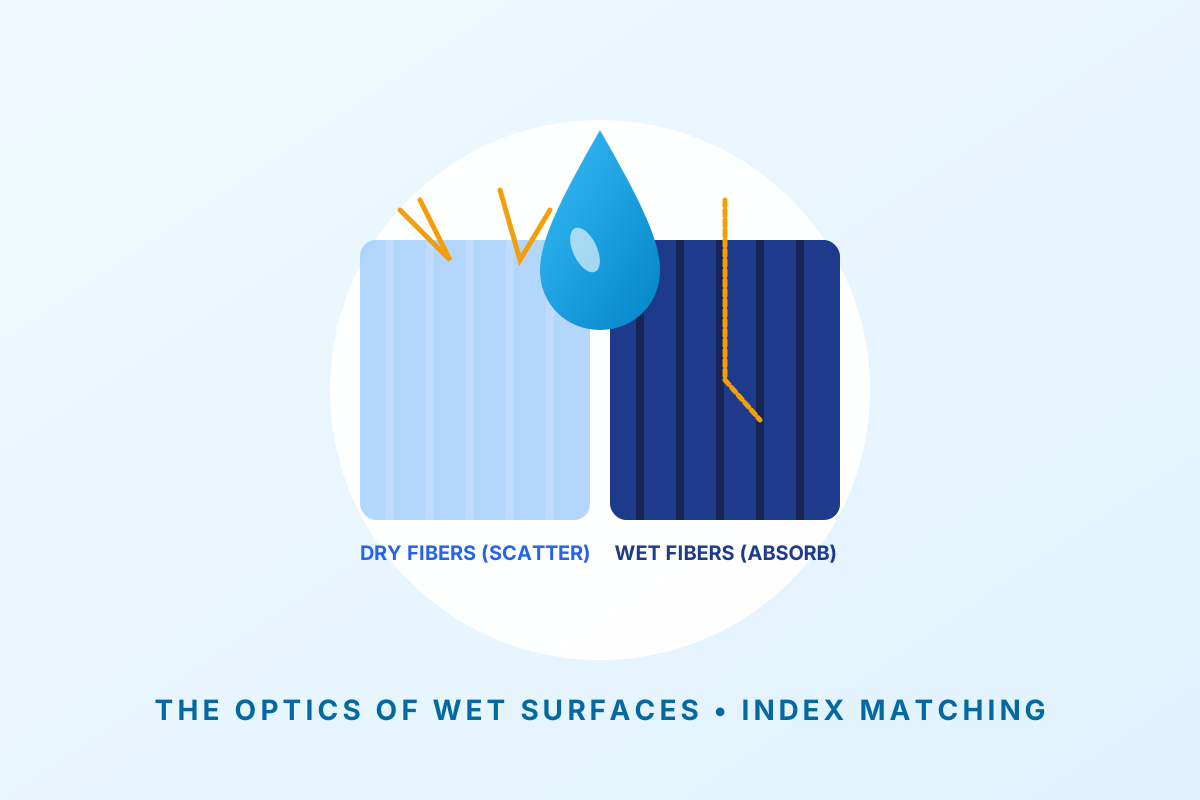
The explanation rests in optical physics rather than chemistry. Dry fabric looks bright because individual fibers are surrounded by air. Air has a refractive index of approximately 1.00, while cotton and synthetic fibers have refractive indices around 1.53. This large difference in refractive index causes incoming light rays to scatter violently off the outer surfaces of the fibers, bouncing back to our eyes as diffuse white glare that dilutes the garment's true color.
When fabric is soaked with water, which has a refractive index of 1.33, that optical boundary narrows significantly. Instead of scattering immediately off the fiber boundaries, light rays glide smoothly through the water-fiber interface and penetrate deep into the interior threads. Once inside the weave, the light bounces repeatedly against dyed fibers, giving dye molecules multiple chances to absorb specific wavelengths.
Because substantially less light escapes back to your eyes, your brain perceives the dampened area as deeper, richer, and darker. As soon as the water evaporates and air fills the microscopic spaces between the fibers once more, the strong optical mismatch returns, and your garment regains its familiar lighter hue.
Key Takeaways
- Dry cloth appears light because the air-fiber boundary scatters white light directly to our retinas.
- Water has a refractive index of 1.33, smoothing the boundary and allowing light to penetrate deeply.
- Internal reflections cause dyes to absorb more light, resulting in fewer returning photons.