Almost everyone grew up believing that fingertips prune in the bathtub because dead skin cells soak up water and swell like kitchen sponges. While it is true that keratin absorbs moisture, that simple sponge theory collapses under medical inspection. If wrinkling were merely passive water absorption, severed fingers or people with severed median nerves would still prune in water. They do not.
Surgeons first noticed in the 1930s that patients with severed nerve pathways in their arms completely lost the ability to develop wrinkled fingers on the affected hand. Modern research has confirmed that pruning is an active, involuntary response directed by the autonomic nervous system: the same control center that manages heart rate, perspiration, and pupil dilation.
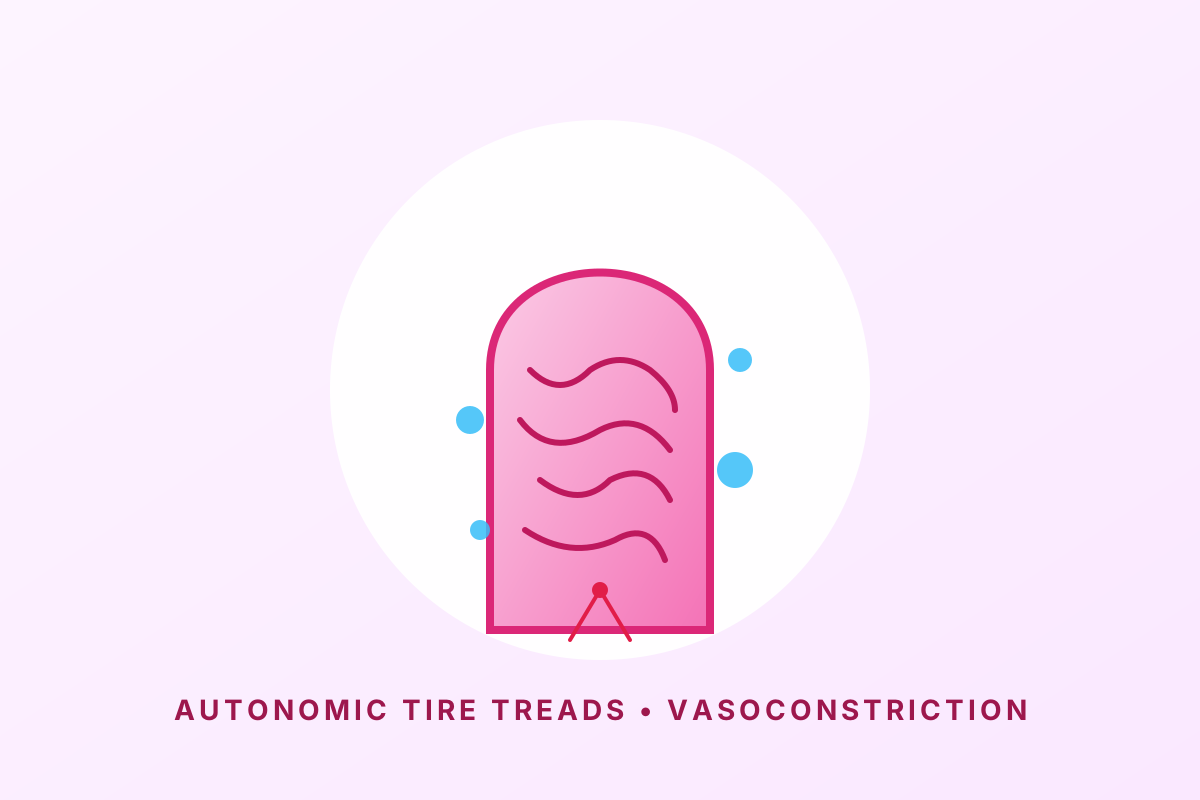
When your skin is submerged in water for roughly five to ten minutes, sweat pores open and allow electrolyte levels to shift slightly. Sensory neurons detect this alteration and signal the sympathetic nervous system to constrict local glomus bodies and blood vessels beneath the skin. As blood volume drops in the fingertip pulp, negative pressure pulls the fleshy upper layers downward, creating systematic valleys and ridges.
Evolutionary biologists believe this adaptation provided an invaluable survival edge for our ancestors. The distinct pattern of wrinkles functions exactly like the sipes and treads on rain tires, channeling water away from the contact patch so ancient humans could securely grip wet stones, spear fish, and forage along slippery riverbanks.
Key Takeaways
- Fingertip wrinkling is not passive swelling; it requires an intact, functioning nervous system.
- Sympathetic nerve signals constrict blood vessels, pulling the skin down into deliberate drainage valleys.
- The ridges work like rain tire treads, significantly boosting friction and grip on submerged items.