Few odors elicit deeper literary nostalgia than the rich, mellow fragrance of an antiquarian library or a dusty used bookstore. Perfumers have spent fortunes trying to bottle it, and readers frequently bury their noses into old yellowed pages just to inhale it. But what exactly are we smelling when we open a book published in 1920?
The answer is organic chemistry in slow motion. Before the mid-19th century, books were printed on durable rag paper crafted from recycled cotton and linen rags. However, the Victorian explosion of mass printing demanded cheaper materials, leading mills to manufacture paper out of raw wood pulp. Wood pulp is filled with cellulose and lignin: the rigid polymer that gives trees their structural strength.
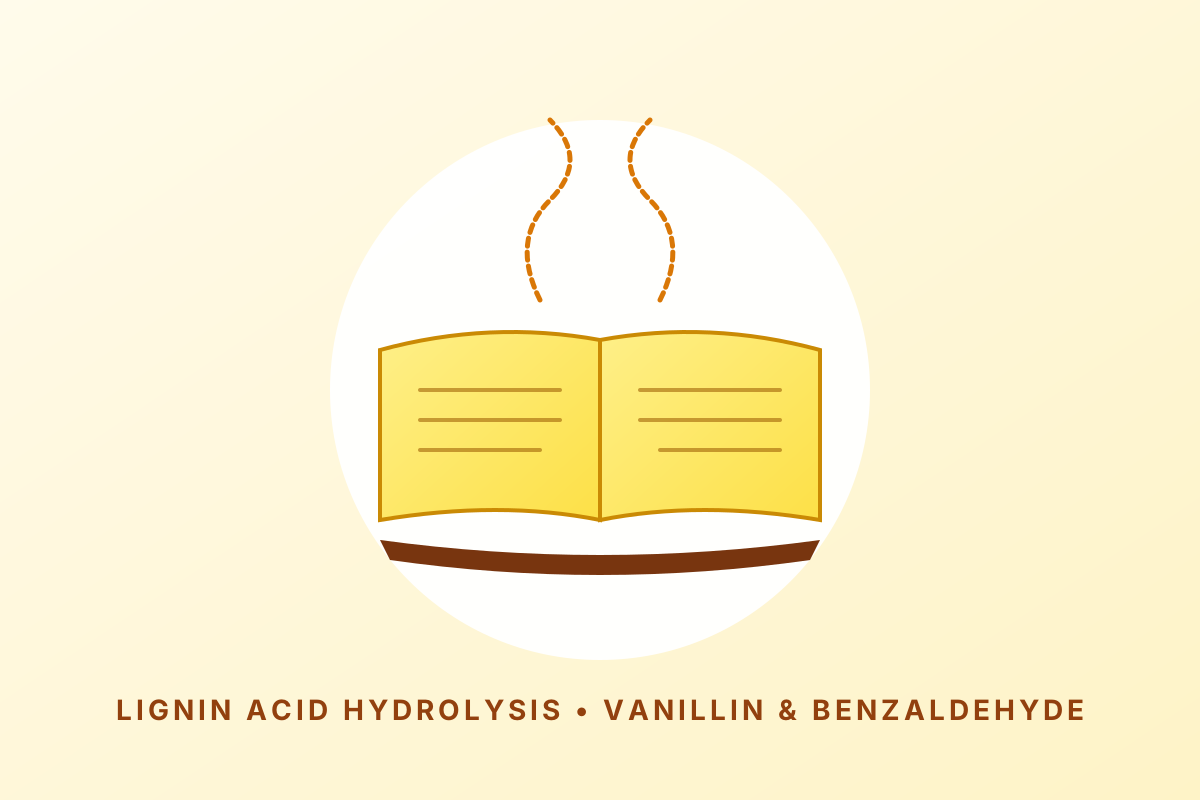
Unless wood pulp is aggressively bleached and purified, lignin remains trapped inside the paper sheets. Over decades, exposure to atmospheric oxygen, ambient humidity, and manufacturing acid residue triggers a gradual chemical breakdown known as acid hydrolysis. As the long polymer chains decompose, they produce a bouquet of volatile organic compounds (VOCs).
Among these degradation products is vanillin, the exact chemical compound that gives vanilla beans their signature aroma. Another byproduct is benzaldehyde, which imparts an almond-marzipan sweetness, accompanied by furfural with its baked-bread note, and toluene adding floral undertones. In modern conservation labs, chemists use material degradomics: sniffing these gas emissions with mass spectrometers to date rare manuscripts without touching a single page.
Key Takeaways
- The scent of old books comes from the slow acid hydrolysis of lignin and cellulose in wood-pulp paper.
- Key volatile byproducts include vanillin (vanilla), benzaldehyde (almonds), and furfural (bready notes).
- Conservation scientists analyze book VOC emissions with spectrometers to non-destructively date artifacts.