We have all made the mistake of drinking an icy smoothie too fast on a sweltering summer afternoon. Within three seconds, a piercing, throbbing ache blooms behind your forehead and temples, bringing your conversation to an abrupt halt. Scientifically known as sphenopalatine ganglioneuralgia, brain freeze is one of the most intense and harmless headaches known to medicine.
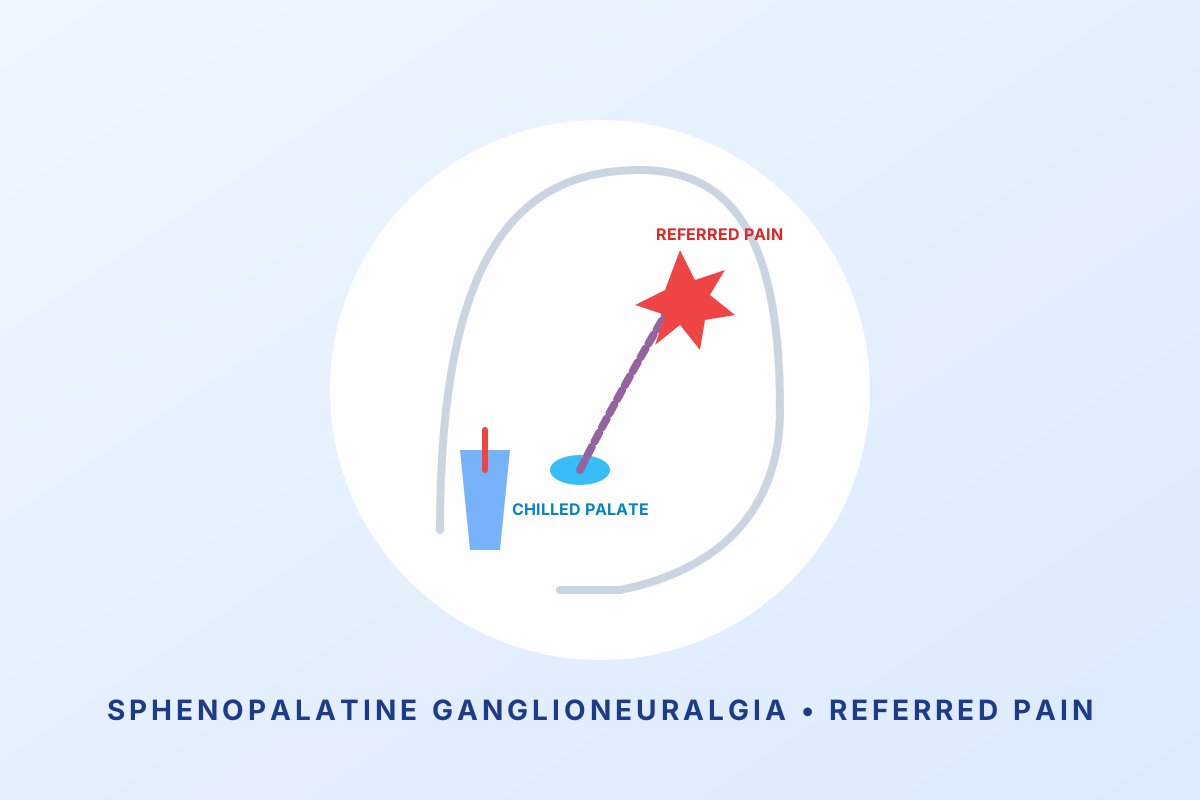
The sensation starts at the roof of your mouth. When a frigid liquid strikes your posterior palate, it causes a severe, sudden temperature drop at the junction where major cranial blood vessels run toward the brain. The brain hates drastic thermal changes because delicate neural tissue requires a very stable temperature to function.
In an emergency reflex to protect brain temperature, the autonomic system signals the anterior cerebral artery to dilate dramatically, surging a wave of warm blood directly into the skull. This sudden vascular dilation causes a rapid pressure surge inside intracranial vessels.
Crucially, the palate and the forehead share the same primary sensory pathway: the ophthalmic branch of the massive trigeminal nerve. Because the brain rarely experiences rapid blood vessel swelling in the roof of the mouth, the sensory cortex misinterprets these urgent alarm signals as coming from the forehead and eyes: a classic medical phenomenon called referred pain.
Key Takeaways
- The official clinical term for brain freeze is sphenopalatine ganglioneuralgia.
- Rapid chilling of the palate triggers sudden dilation of the anterior cerebral artery to surge warm blood.
- Shared neural pathways in the trigeminal nerve lead the brain to perceive the pain in the forehead.