If reading the title of this story made you feel a sudden tightness in your throat or an urge to draw a deep, gaping breath, you are not alone. Contagious yawning is so powerful that roughly 60 to 70 percent of adult humans will yawn within five minutes of witnessing another person yawn, watching a video of a yawn, or even just thinking about the act.
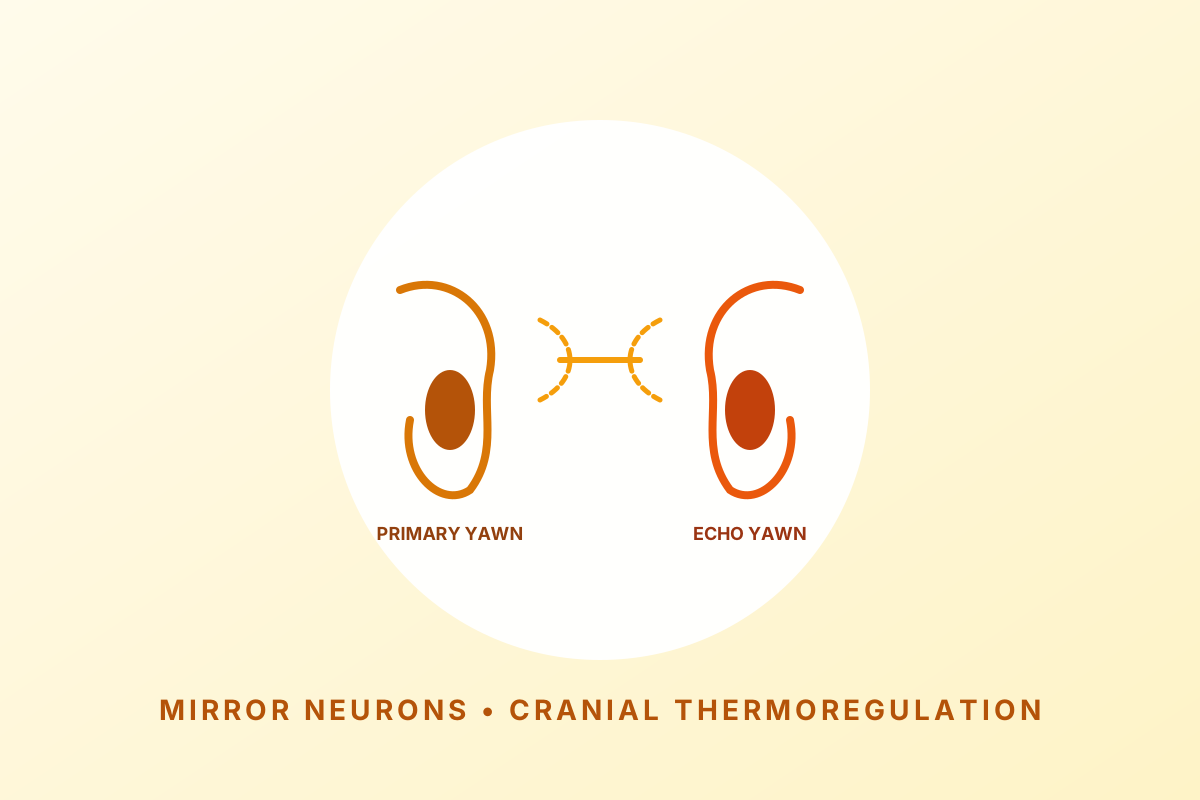
Neuroscientists have discovered that contagious yawning relies on our mirror neuron system: specialized brain circuits located in the premotor cortex and inferior parietal lobe. When you see someone smile, wince, or yawn, these neurons fire as if you were performing the physical action yourself. This automatic motor resonance is closely intertwined with social empathy; individuals with higher empathy test scores consistently demonstrate stronger susceptibility to contagious yawning.
However, empathy is only half the mystery. Why did yawning evolve in the first place? The leading physiological answer is the cranial cooling hypothesis. During a yawn, powerful jaw contraction forces venous blood away from the head, while a massive inhalation of cooler room air exchanges heat across mucosal surfaces in the nasal passages and pharynx.
This thermal radiator effect drops the temperature of blood entering the brain, optimizing neural processing efficiency and elevating alertness across social groups. Evolutionary biologists suggest that contagious yawning served as an ancient synchronization tool, keeping ancestral tribes simultaneously vigilant against predators during quiet transition periods like dawn and dusk.
Key Takeaways
- Contagious yawning is triggered by mirror neurons firing in empathetic motor circuits.
- Deep inhalation and facial stretching cool arterial blood entering the brain like a radiator.
- Yawn synchronization historically helped keep social groups collectively alert to dangers.